


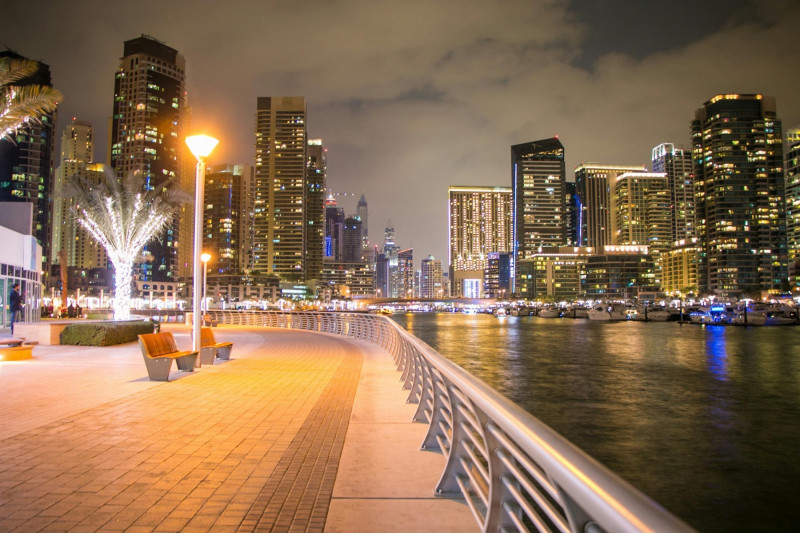
Dubai has become one of the most closely watched global real estate markets in recent years. At San Patrik, we advise clients who view property as part of a broader international portfolio rather than a standalone purchase. The interest is driven not only by luxury, but by a combination of population growth, international mobility, stable demand and a relatively clear legal framework for foreign buyers.
For investors who think in terms of portfolio diversification, Dubai is increasingly considered alongside Europe and other established markets.
This overview provides a realistic framework for understanding why some buyers are considering property in Dubai.
Is it worth buying property in Dubai in 2026?
Dubai remains attractive due to strong population growth, active rental demand and a tax-efficient environment. However, returns vary significantly by location and developer quality, which makes professional selection essential.
A global market supported by real demand
Dubai is one of the world’s most visited cities and a major international business hub. Tourism, finance and logistics continue to generate steady demand for both rentals and residential property.
The city currently has around 3.6 million residents, with long-term development plans projecting growth to approximately 7.8 million by 2040. This demographic trend supports long-term housing demand, particularly in areas benefiting from new infrastructure.
Dubai has also positioned itself as a base for globally mobile professionals, entrepreneurs and investors seeking a location outside Europe.
Rental yields and investment logic
One of the main reasons investors consider Dubai is the potential for stable rental income. Long-term rental yields often range between 5% and 7%, while short-term rental strategies may achieve higher returns depending on location, property type and management.
Actual performance depends heavily on:
- micro-location
- building quality
- developer reputation
- service charges and maintenance costs
- rental strategy
Serious buyers approach the market selectively and analyse each project in detail before making a decision.
Price ranges and entry levels
For reference, entry-level freehold apartments in emerging areas may start from approximately EUR 200,000, while well-located properties in established communities typically range between EUR 350,000 and EUR 700,000.
Premium waterfront apartments, branded residences and villas can exceed EUR 1 million, depending on location, developer and specifications.
As with any international market, pricing varies significantly by micro-location and project quality, which is why individual analysis is essential before making a decision.
Taxes and transaction costs
Dubai is known for its tax-efficient environment. There is currently no personal income tax and no tax on rental income for individuals.
However, buyers should account for transaction costs. The property transfer fee is typically around 4% of the purchase price, in addition to administrative and registration costs.
Understanding these factors is essential when calculating realistic investment returns.
Residency options for property owners
For some buyers, an additional motivation is the availability of residency visas linked to property ownership. Depending on the value of the investment, different visa options may be available, including longer-term residency programs for higher-value purchases.
This aspect can be relevant for buyers who wish to combine investment with occasional personal use of the property.
Stability and quality of life
Dubai consistently ranks highly in global safety and quality-of-life indices. A structured legal framework, modern infrastructure and efficient administration contribute to a sense of predictability for international buyers.
For investors purchasing property abroad, perceived stability is often a key factor in decision-making.
Who Dubai may be suitable for
Buying property in Dubai can make sense for buyers who:
- think in portfolio terms
- want to diversify assets outside the EU
- seek rental income
- want a second home in a global hub
- have a medium to long-term investment horizon
It is not a market for impulsive decisions. Differences between locations, developers and property types can be significant.
Our approach to international investments
When advising clients on international property purchases, the focus is on selection rather than volume.
Key factors include:
- micro-location
- developer track record
- rental potential
- maintenance costs
- resale liquidity
- exit strategy
Dubai can be a relevant component of a broader investment strategy, but only when supported by clear numbers and realistic expectations.
Conclusion
Dubai has developed into one of the most visible international real estate markets within a relatively short period. Population growth, global mobility and investor interest continue to support demand.
As with any cross-border purchase, careful analysis and a selective approach are essential before making a decision.
For investors considering Dubai as part of a broader portfolio, the first step is a structured discussion around objectives, risk tolerance and time horizon before reviewing specific opportunities.


